
Most visitors to western Japan use Osaka as their base because it offers plenty to do. The city sits at the centre of a well-connected rail network, with fast and convenient train connections to destinations across the Kansai region and far beyond.
Kyoto and Nara are usually the first choices for day trips from Osaka, and both are worth visiting. But once you have seen the main temples, there are better places to visit nearby that are less crowded, easier to enjoy, and feel more unique to explore.
Kobe, known for its seaside charm and famous Kobe beef, is 20 to 30 minutes away by express train. Hiroshima, a city of peace and history centred on the Atomic Bomb Dome and Peace Memorial Park, takes approximately 1 hour and 40 minutes by Shinkansen. Kanazawa, one of Japan’s most intact Edo-period cities with beautiful gardens and geisha districts, sits just over 2 hours from Shin-Osaka Station.
For travellers planning their first Japan tour from Singapore, this guide covers the most rewarding day trips from Osaka, from quick half-day escapes to full-day adventures that go well beyond the typical tourist circuit.
The Classic Choices (Under 1 Hour)
These two cities near Osaka are easy to reach and worth visiting, and you can also do them as a short half-day trip if you don’t have much time.
1. Kobe: 20–30 Minutes
A port city with a long history of international trade, Kobe has a different vibe from the rest of Kansai. In our experience, this day trip from Osaka to Kobe is one of the easiest and most enriching short excursions, combining waterfront views, historic districts, and famous local food.
Kobe offers far more than its famous beef. While the dining scene certainly lives up to the hype, we especially recommend riding the Kobe Nunobiki Ropeway, exploring the peaceful herb gardens, and strolling through the charming colonial-era Kitano district.
What to See
- Kitano-Cho District: A historic area in Kobe where foreign merchants and diplomats settled after the port opened in the late 19th century.
- Ikuta Shrine: A Shinto shrine in central Kobe with a history of over 1,800 years, founded in 201 AD. It is regarded as one of the oldest shrines in Japan.
- Nankinmachi (Chinatown): One of Japan’s three major Chinatowns, with over 100 restaurants, street food vendors, and shops along its main street.
- Nunobiki Herb Gardens: Japan’s largest herb gardens feature around 75,000 plants and 200 species across 12 themed seasonal garden areas.
- Meriken Park: Kobe’s main waterfront promenade, home to the ‘BE KOBE’ monument. Particularly pleasant in the early evening.
What to Eat: Kobe beef. Prices vary by restaurant, but Kobe beef is usually a few thousand yen per 100g, while a full teppanyaki meal typically costs ¥8,000–¥30,000 per person.
Getting There: Take the JR Tokaido-Sanyo Line from Osaka Station to Sannomiya Station in Kobe. The journey takes around 20–30 minutes.
Combine With: Himeji. Both cities sit on the same JR line, so continuing west to Himeji on the same day is straightforward.
Planning Tip: If you’re short on time or prefer a hassle-free experience, consider booking our private Kobe tour that includes hotel pickup and lets you customise the itinerary according to your needs and preferences.
2. Okayama: 45 Minutes
Okayama pairs a striking all-black castle with one of Japan’s most celebrated landscape gardens, separated by a short walk across a river. In our experience, a half-day here covers both comfortably and makes for an excellent day trip from Osaka if you want something less touristy than Kyoto.
What to See:
- Okayama Castle: Known as the “Crow Castle” for its striking black exterior, it was originally built in 1597 in the Azuchi–Momoyama style. The current structure is a 1966 reconstruction, located along the Asahi River opposite Korakuen Garden.
- Korakuen Garden: It is one of Japan’s top three landscape gardens, alongside Kenrokuen and Kairakuen. Located next to Okayama Castle, it offers scenic views of the castle from within the garden.
- Kibitsujinja Shrine: A major Sanyo Road shrine dedicated to Okibitsuhiko Okami. It features unique Kibitsu-zukuri architecture and is linked to Momotaro folklore and the Narukama fortune ritual.
What to Eat: Chiya beef (a local wagyu) and Kakurezushi (sushi layered with shredded omelette, wrapped in persimmon leaves).
Getting There: JR Sanyo Shinkansen from Shin-Osaka (approximately 45 minutes).
3. Himeji: 30-60 Minutes
Himeji is a historic city in Hyogo Prefecture, best known for the UNESCO-listed Himeji Castle. It has around half a million residents and lies less than an hour from Osaka and Kyoto. If you appreciate history and do not mind climbing quite a few stairs, Himeji Castle is absolutely worth visiting. To make the most of the trip, we also recommend stopping by Koko-en, where the peaceful traditional gardens provide a relaxing contrast to the castle grounds.
What to See:
- Himeji-Jo: A UNESCO World Heritage Site and National Treasure, comprising 83 buildings.
- Kokoen Garden: Nine walled gardens immediately adjacent to the castle, designed using Edo-period landscaping techniques.
- Shoshazan Engyo-ji Temple: A Buddhist temple complex near Himeji Castle on Mount Shosha. Some scenes from ‘The Last Samurai’ (2003) were filmed in and around the main halls.
What to Eat: Local specialities are available along Miyuki Street, the covered shopping arcade between Himeji Station and the castle entrance.
Getting There: JR Special Rapid from Osaka Station (approximately 1 hour; covered by JR Pass), or Shinkansen from Shin-Osaka (approximately 30 minutes).
Best Time to Visit: Late March to early April for cherry blossoms, though this is also the busiest period. Allow 1.5 to 4 hours at the castle, depending on crowds.
Traveller Tip: Many travellers tend to combine Himeji with Kobe in a Single day. Our Osaka Kyoto land tour package helps travellers explore these iconic destinations more conveniently as part of a curated Japan itinerary.
The Underrated Alternatives (1–2.5 Hours)
Most travellers to the Kansai region never make it to these destinations. Yet from our experience organising day trips from Osaka these offer some of the most distinctive experiences, often with fewer crowds even during peak travel seasons.
4. Nagoya: 1 Hour
Japan’s fourth-largest city is often overlooked for smaller, more scenic places to visit near Osaka. Nagoya has strong historical roots and is also the nearest major city to Ghibli Park.
What to See:
- Atsuta Shrine: One of Shinto’s most important shrines, dedicated to Amaterasu and home to the sacred Kusanagi sword. It is set in a peaceful wooded park.
- Nagoya Castle and Hommaru Palace: Japan’s first castle to be designated a National Treasure. The adjacent Hommaru Palace, rebuilt and reopened in 2018, features elaborately painted sliding screens and gilded interior ceilings.
- SCMAGLEV and Railway Park: A JR Central museum showcasing Japan’s high-speed rail evolution, featuring historic steam engines, Shinkansen trains, and advanced maglev technology.
- Ghibli Park (Nagakute): Opened in 2022, Ghibli Park brings Studio Ghibli’s worlds to life across five themed areas within Expo 2005 Park, allowing visitors to explore forests, paths, and film-inspired settings on foot.
Getting There: Shinkansen from Shin-Osaka (approximately 1 hour 10 minutes).
Note: Covering Nagoya and Ghibli Park in a single day is feasible but tight. For families, an overnight stay is the more relaxed option, or booking our private Osaka day tour can help simplify transport planning and maximise sightseeing time for a smoother experience.
5. Kurashiki: 1 Hour 30 Minutes
Kurashiki is a historic city in Okayama Prefecture near Okayama City, making it a worthwhile day trip from Osaka for travellers interested in Edo-period heritage and preserved canal districts.
The Kurashiki Bikan Historical Quarter, the canal reflections, traditional stone bridges, and willow-lined waterways create a timeless atmosphere that feels well preserved. We especially recommend taking time to watch the traditional boatmen glide through the historic district for a more immersive cultural experience.
What to See:
- Kurashiki Bikan Historical Quarter: It preserves the city’s Edo-period charm with canal-lined streets, white storehouses, and converted cafés, boutiques, and museums in a beautifully restored historic district.
- Ohara Museum of Art: Opened in 1930, Japan’s oldest private Western art museum, displays works by Picasso, El Greco, Pollock, and more.
- Momotaro Karakuri Museum: An interactive museum in Kurashiki featuring optical illusions, folklore exhibits, and playful attractions inspired by Japan’s Momotaro legend.
Getting There: JR Sanyo Line from Osaka Station (approximately 1 hour 30 minutes). Often paired with Okayama, which is 15 minutes further east, for a full day covering both cities.
6. Wakayama: 1 Hour 30 Minutes
Wakayama blends Japan’s spiritual heritage and coastal scenery, home to sacred pilgrimage routes, historic temples, beautiful beaches, Wakayama Castle, and its distinctive local ramen culture.
What to See:
- Kuroshio Market: Located in Wakayama Marina City, it offers fresh seafood, sashimi, charcoal-grilled dishes, and a lively seaside market atmosphere.
- Porto Europa: A free-entry European-themed park on the island’s seafront, divided into sections representing streets in France, Italy & Spain. Rides and attractions require a separate fee.
- Kishu Kuroshio Onsen: A hot spring at the edge of Wakaura Bay, with open-air baths, a sauna, and panoramic views across the water.
What to Eat: Ramen at Ide Shoten. The signature bowl uses a tonkotsu shoyu broth with thin noodles.
Getting There: JR Kuroshio Limited Express from Osaka (approximately 1 hour 30 minutes).
7. Hiroshima: 1 Hour 40 Minutes
Hiroshima is a city rebuilt from near-total destruction and is now one of the most visited places near Osaka.
It is a city that balances remembrance with optimism and everyday life. While the Peace Memorial Museum is incredibly moving, the city itself feels warm, lively, and welcoming, making it far more than just a historical destination.
What to See:
- Atomic Bomb Dome (Genbaku Dome): The only building in the immediate blast area to remain partially standing after 6 August 1945. Preserved in its damaged state and inscribed as a UNESCO World Heritage Site.
- Hiroshima Peace Memorial Park and Museum: The park contains the cenotaph, the Children’s Peace Monument, and the Flame of Peace. The museum documents the history of the bombing and the city’s recovery.
- Orizuru Tower: An observation tower opened in 2016, offering views of the dome and across the city.
Optional Add-On: Miyajima Island, home to the floating torii gate of Itsukushima Shrine, is reachable by a short ferry from Hiroshima’s waterfront.
Getting There: Shinkansen from Shin-Osaka (approximately 1 hour 30 minutes).
8. Takamatsu: 2 Hours
Takamatsu is the main gateway to Shikoku island and one of the most fascinating destinations in western Japan for garden enthusiasts planning a day trip from Osaka.
What to See:
- Ritsurin Garden: This garden in Takamatsu is a celebrated Edo-period landscape garden featuring ponds, hills, teahouses, and scenic views of Mount Shiun.
- Takamatsu Castle: Also known as Tamamo Park, it preserves the ruins of Japan’s famous water castle, featuring historic turrets, stone walls, gardens, and Hiunkaku Villa.
- Yashima Temple: The 84th temple of the Shikoku 88-temple pilgrimage, with panoramic views over Takamatsu and the Seto Inland Sea.
What to Eat: Chicken on a bone: crispy fried chicken with tender meat, a Takamatsu speciality available across the city.
Getting There: JR Shinkansen from Shin-Osaka to Okayama, then the JR Seto Ohashi Line to Takamatsu (approximately 2 hours).
9. Kanazawa: 2 Hours 15 Minutes
Kanazawa is often compared to Kyoto before mass tourism reshaped it. It has preserved geisha districts, samurai neighbourhoods, and the most celebrated Edo-period garden in Japan.
What to See:
- Kenrokuen Garden: One of Japan’s three most beautiful gardens, Kenrokuen features seasonal landscapes, ponds, streams, and traditional Edo-period garden design.
- Kazue-machi Chaya District: One of three preserved chaya districts in the city, running alongside a narrow canal. An evening walk here may be accompanied by the sound of shamisen drifting down from the upper floors of the teahouses.
What to Eat: Gold-leaf ice cream, a popular local treat, is topped with edible gold leaf, reflecting the city’s tradition of gold craftsmanship.
Getting There: Take the JR Thunderbird Limited Express from Osaka Station to Tsuruga Station, then transfer to the Hokuriku Shinkansen for Kanazawa (approximately 2 hours 15 minutes).
Bonus: Matsuyama: 4 Hours
Matsuyama is the capital of Ehime Prefecture on the island of Shikoku. It holds Japan’s oldest hot spring complex, a hilltop castle that sits at the centre of the city, and a direct connection to one of Japan’s most loved animated films. While it’s further than typical day trips from Osaka, it can still appeal to travellers looking for a slower-paced and culturally rich long-day itinerary.
What to See:
- Dogo Onsen Honkan: Matsuyama’s iconic bathhouse, built in 1894 and known for its maze-like wooden interior and connection to Studio Ghibli’s Spirited Away inspiration.
- Ishiteji Temple: The 51st temple of the Shikoku 88-temple pilgrimage, located close to Dogo Onsen.
- Matsuyama Castle: One of Japan’s twelve original Edo-period hilltop castles, accessible by chairlift or cable car from the city centre. Around 200 cherry trees bloom in the castle grounds each spring.
What to Eat: Taimeshi (sea bream and rice), served either with the fish cooked whole in the pot, or raw as sashimi on top.
Getting There: Shinkansen from Shin-Osaka to Okayama, then ferry or bus connection to Matsuyama (approximately 4 hours 13 minutes). A private tour, rather than a group tour, is the most practical option for a single-day visit at this distance.
Why Private Tours Make Sense for Longer Day Trips
As distances increase, the time spent on trains and transfers can quickly consume a full day on a trip from Osaka. For example, a round trip to Hiroshima already takes over three hours, and adding Miyajima Island makes the schedule even tighter.
Private tours offering an Osaka tour package in Singapore simplify this by providing door-to-door hotel pickup, no need to handle luggage between stations, and no fixed timetable limiting your time at attractions. With JST Holiday, a Japan tour Singapore travel agency, travellers can choose the right vehicle for their group size, from sedans and Alphards to larger vans and coaches.
Local drivers also ensure smoother routes and better access to sightseeing, making longer day trips more comfortable and allowing you to focus on the experience rather than the logistics.
Frequently Asked Questions About Day Trips From Osaka
Where to go for a day trip from Osaka?
Popular day trips from Osaka include Kyoto, Nara, Hiroshima, Okayama, Wakayama, Kanazawa, and Takamatsu. A one-day Kyoto tour offers the chance to explore historic temples, traditional streets, and famous cultural landmarks, all within a short train ride from Osaka. Meanwhile, destinations like Nara are known for peaceful parks and encounters with deer. Hiroshima, Kanazawa, and Takamatsu offer memorable experiences ranging from historic sites to regional cuisine and scenic gardens.
Is Nara a better day trip from Osaka or Kyoto?
The Nara day trip is better from either Osaka or Kyoto; both work equally well, as it is about 45 minutes by train from each. The choice depends on your itinerary, as both cities offer easy access, and Nara fits easily into an Osaka or Kyoto day trip.
Which is the best day trip from Osaka by train?
Kobe is often considered the best day trip from Osaka by train because it is only 20–30 minutes away and combines waterfront scenery, historic districts, shrines, Chinatown, and famous Kobe beef. Its short travel time and variety of attractions make it one of the easiest and most rewarding trips from Osaka.
Can Hiroshima be done as a day trip from Osaka?
Yes, Hiroshima can be done as a day trip from Osaka. The Shinkansen takes about 90 minutes each way, making it possible to visit major sites like the Atomic Bomb Dome and Peace Memorial Park in one day.
What is the most visited place in Osaka?
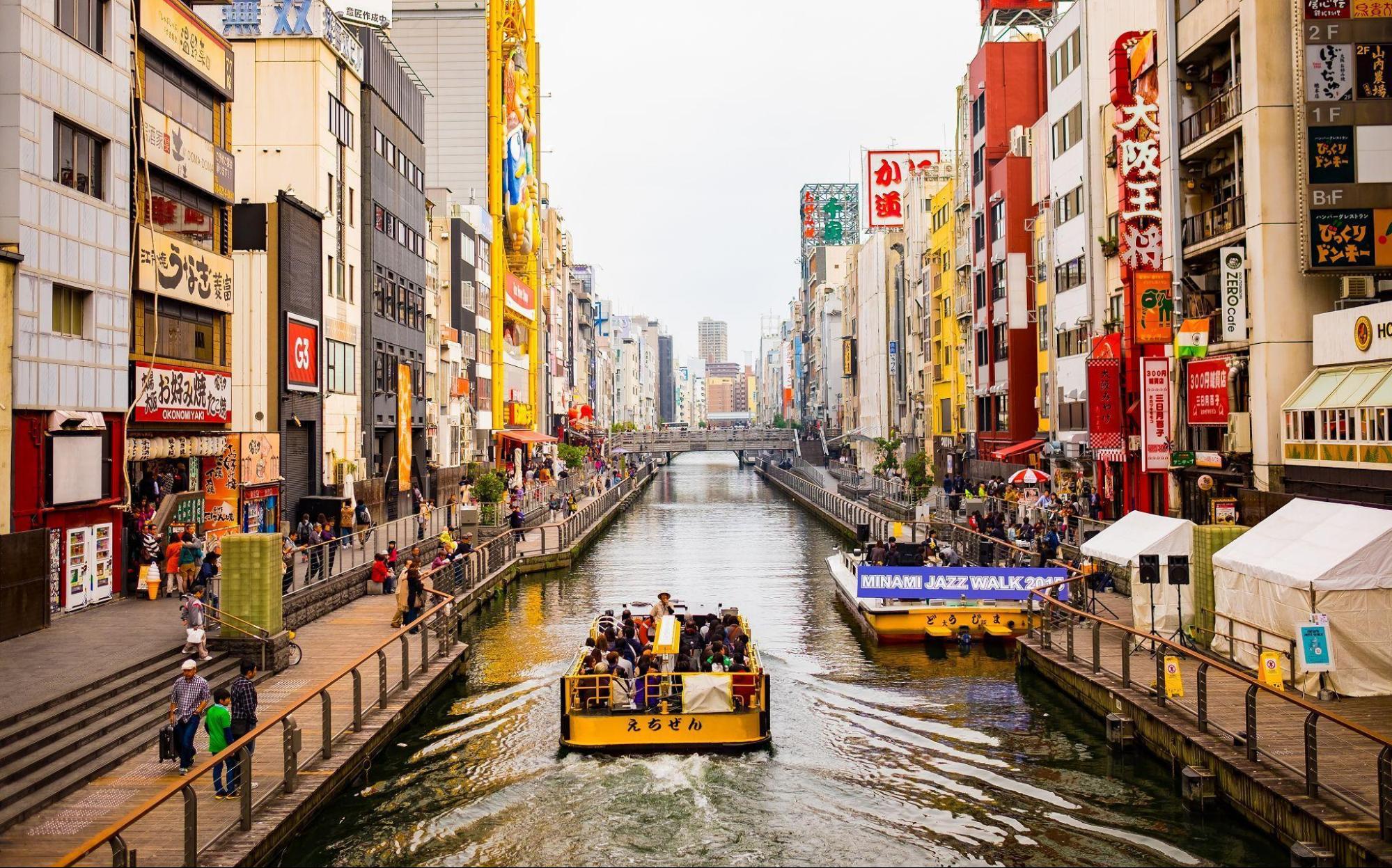
Dotonbori is considered the most visited place in Osaka, known for its neon lights, street food, shopping, and entertainment. Osaka Castle and Osaka Aquarium Kaiyukan are also major attractions, but Dotonbori remains the city’s most iconic tourist hotspot and one of the busiest areas for visitors.